


In an attempt to grab our limited attention in a few milliseconds, web ads today are doing more irritating things than ever. The sites we visit frequently have ads that look bad, force us to watch them before showing us the content, mimic actual content to make us accidentally click on them, auto-play videos/animations, slow our browsers down to a crawl, and so on. The following is one such example:
I know many of you use an adblocker, and I know that is a viable soIution. Despite that, I still haven't gotten around to using one...yet. My general policy was this: if a site's advertisements are irritating, I'll just leave and find another site. That has served me well for a long time, but I am starting to run out of sites to visit.
I love advertising and the creative things people do with it. It would be hypocritcal for me to say otherwise given how much this site has benefitted from serving ads for many years. I just hate how it is getting implemented today, and some of you don't have a choice. A typical ad today makes far less revenue than the same ad shown maybe 5 or 10 years ago. Some of the things I am complaining about are the result of that - we need more noticeagle ads and more people clicking on them to make a fraction of the money we would have made with a single tasteful ad back in the day.
Ultimately, you have the power to influence the ads that appear on your sites. You can limit the number of ads you want to display per page. You can ensure the ads that display aren't irritating. Most importantly, ensure the ads that users see next to your content is relevant such as what SmashingMagazine does:
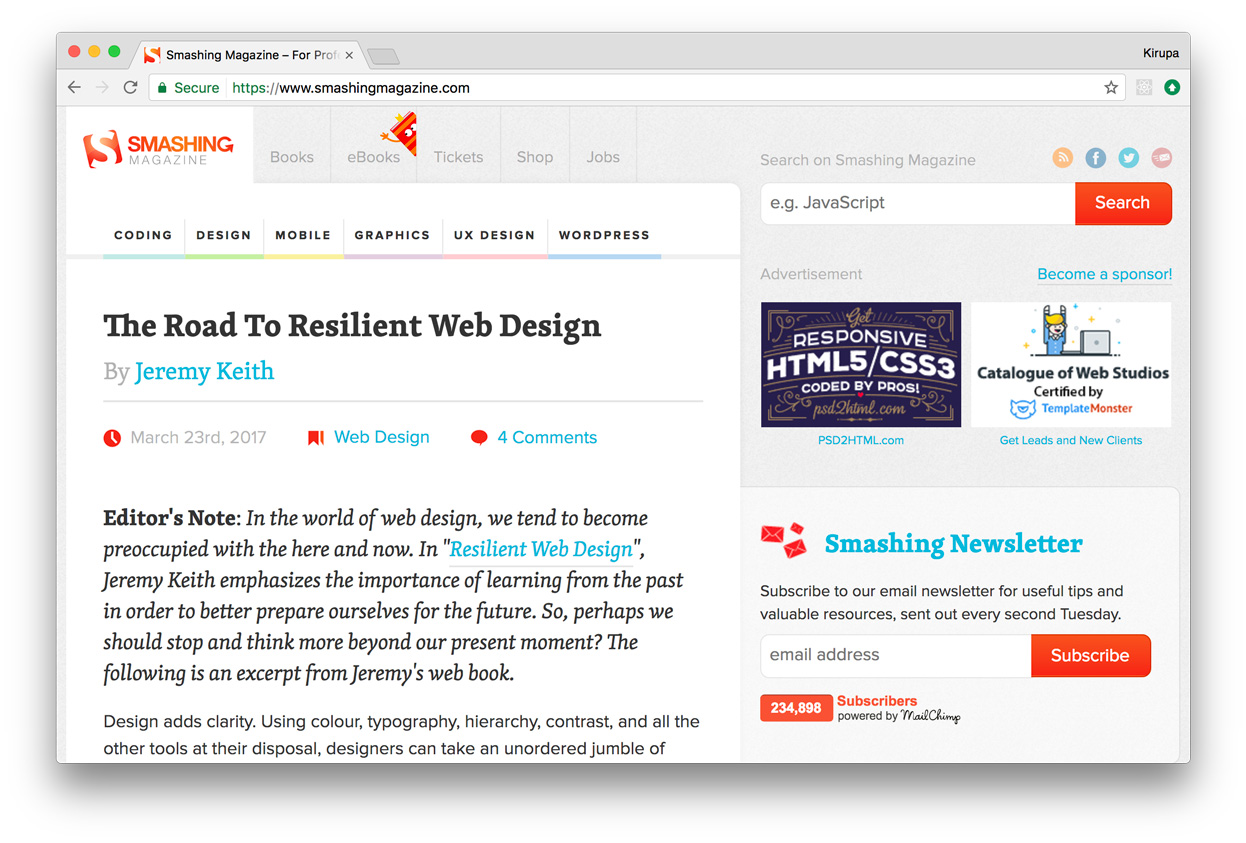
Remember, users aren't visiting your site because of the ads. They are there for the content, so realize that no matter what you do, any form of advertising will be seen as a distraction. The key is for you to find a balance - a balance between making your users happy and making money.
Artificially Boosting Pageviews
Wouldn't it be great to take something that can be displayed in a single page and making that span across many pages...like 172 in the case of the following fine specimen:
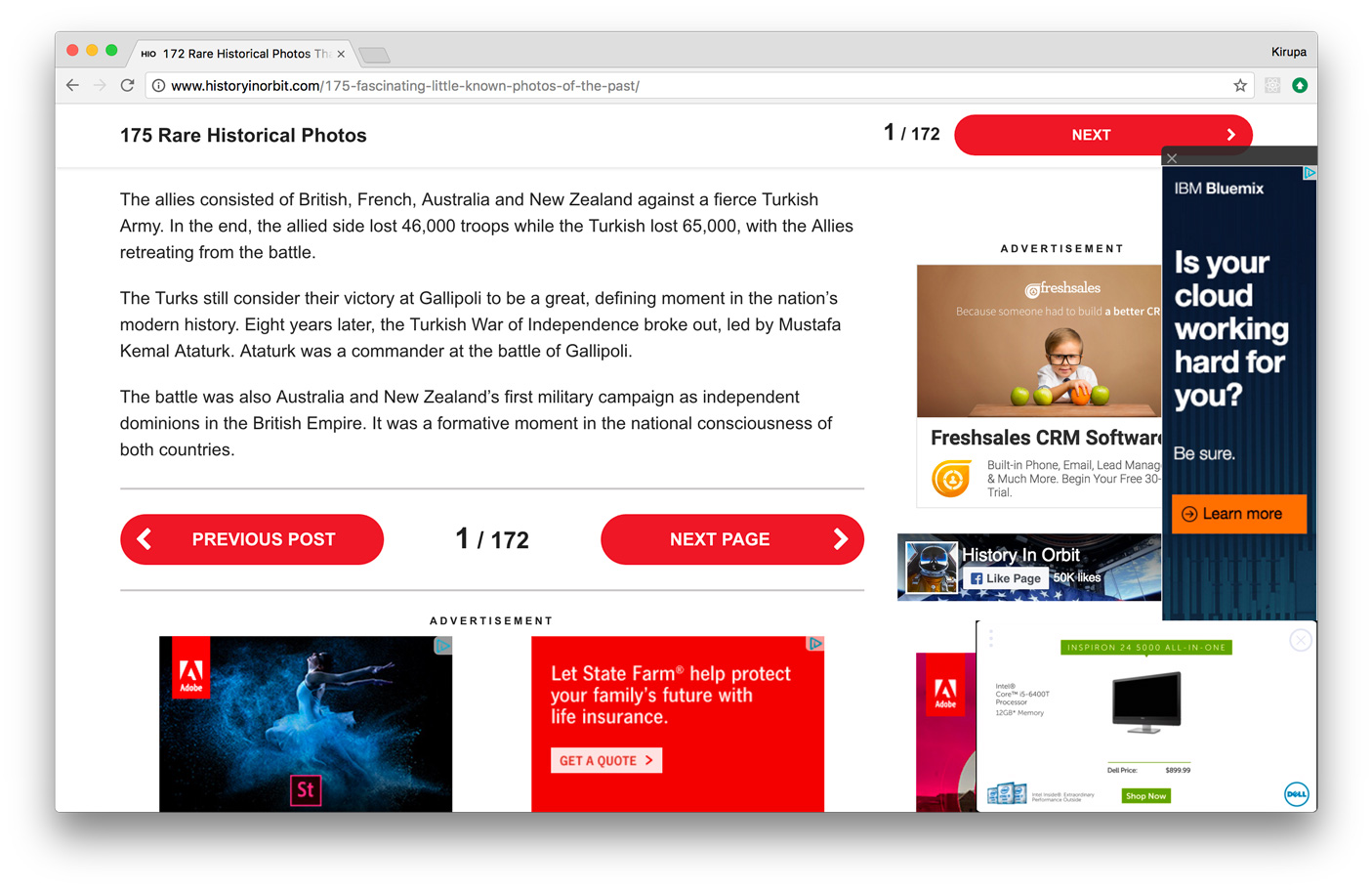
To view all of this content, the expectation is that you the user click on the Next Page button 172 times. Why on earth would anybody do that? Haven't the developers heard of content carousels? Thumbnail images? Pretty much anything is better than this, right?
Well, take a look at the page. With each page navigation, a new set of ads freshly appears. In that screenshot alone, after scrolling towards the bottom of the site, we can count at least 6 meaningfully sized ads. Multiply that by 172 and throw in the ads that you can't see in the screenshot. You can see why somebody would do this. As an added bonus, each navigation probably counts as a pageview. Not only does this site serve new ads with each navigation, it is able to rack up the pageviews as well. Who wouldn't want to do this?
Good Intentions. Still Irritating
You might say that you don't do any of the sorts of things that we've looked at so far - displaying annoying ads and unnecessarily making the user click through pages. Well, what about the following:
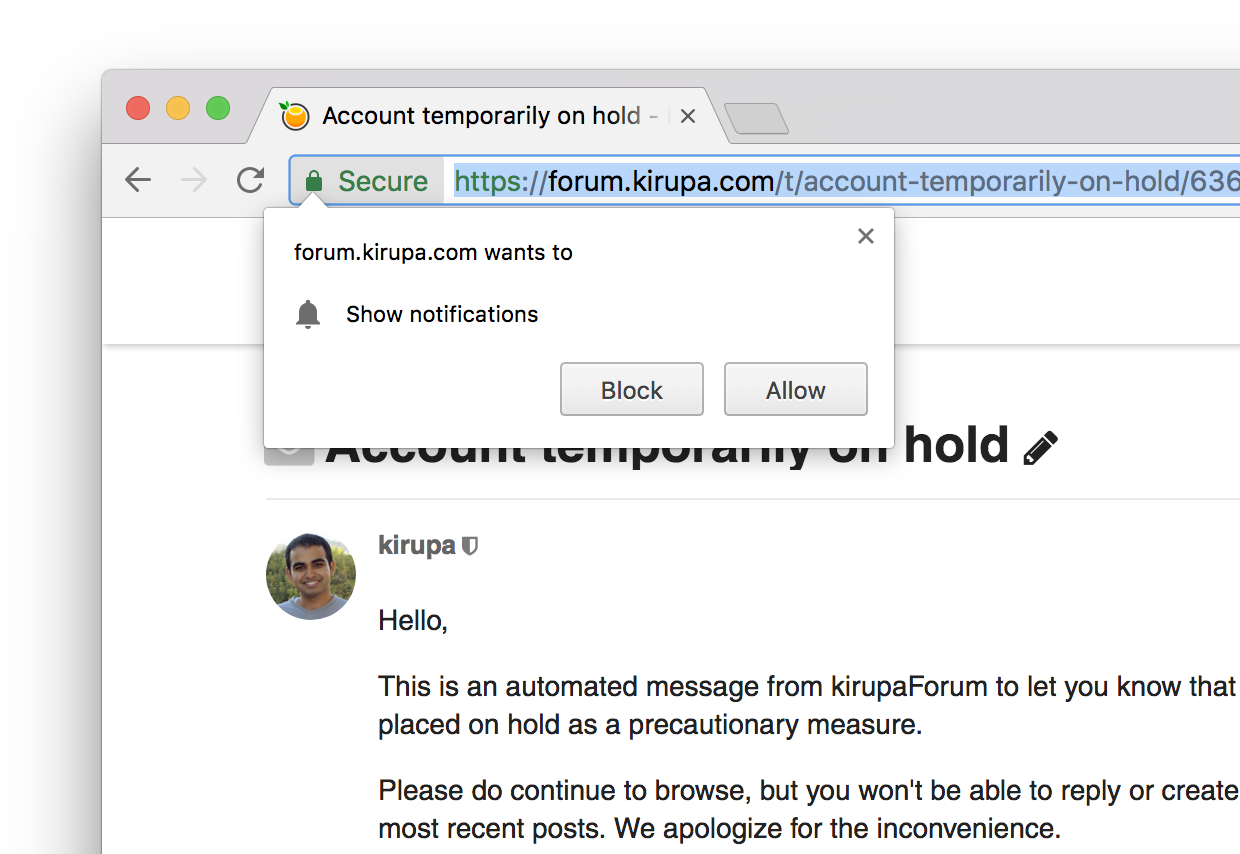
Almost every site we visit for the first time gives us some sort of a browser prompt asking us to do something. Do we want to see notificaitons, can the browser access my location, are we cool with their cookie policy, etc. It's great that sites (and often the browsers) give users all this information and choice. The problem is that we are overloading users. After a while, people will become numb to the numerous permission dialogs. They will simply make a default choice every time to avoid being bothered - even if their choice might have major privacy and security consequences.
**Performance? What is that?** A lot of us [have seen the data](https://www.wired.com/2016/04/average-webpage-now-size-original-doom/) where a typical webpage is about the size of the original Doom. Once we get beyond how cool that is, that is actually terrible for everybody involved. For most of us, it makes browsing the web slow. For a large part of the world, it makes browsing the web almost impossible. **What can we do?**
Conclusion
Take many steps back. Why do you and I create comps? The simple answer is to communicate a design direction. That's it. The goal is to communicate enough detail that allows someone to understand what is about to be built. The more details that you can communicate up front, the more smoothly you can ensure the project gets done on time, on budget, and with fewer surprises.
For example, knowing that there is an animation may cause the development team to rethink how the app is architected from the very beginning. If the developers need to take a dependency on a 3rd party library to enable a cool page flipping transition, you don't want that to happen in the middle of a project. If you budgeted X amount of hours of work for a certain task, you don't want a miscommunication to cause that number to go up. For all of these reasons, relying only on static comps is grossly inadequate. Provide a video file or GIF along with a willingness to work with your developers to help them translate subtle UI details. Your developers will thank you for it.
If you don't know anything besides Photoshop or Illustrator and can't create anything besides static comps, now is your chance to learn something new. You don't want to be one of those designers stuck in the past...unless what you are designing are (literally) static things like logos, comics, posters, t-shirts, and all sorts of other cool stuff. You don't have to learn anything new...for now!
[an error occurred while processing this directive]
