


Pascal Pixel covers a lot of ground here, but the throughline is easy to feel: he likes software that invites personality, curiosity, and strong creative ownership. From DeviantArt and operating system theming to Horse Browser, pixel art, and his blunt thoughts on AI and marketing, this conversation is really about taste, agency, and building things the hard way on purpose.
A conversation with Pascal Pixel | 1h 07m
The early part of this conversation feels like a tour through a more customizable era of computing. Pascal talks about DeviantArt, discovering vector tools, building custom Windows themes, and finding the fun in interfaces that could still be bent into strange personal shapes. That path matters because it explains his instincts. He was drawn to software not just as a utility, but as a medium for play, identity, and experimentation. When locked-down platforms started replacing that world, he did not just lose a hobby. He lost part of the reason computers felt alive in the first place.
That history feeds directly into his design philosophy. Pascal is skeptical of the way modern products often trade personality for polished sameness, and he is just as skeptical of large team structures that blur responsibility. His remarks on design leadership are provocative, but they are consistent: digital products improve when someone with strong taste owns the call, ships, watches how people respond, and adjusts. He has worked across design and code, including large redesign work, so his point is less romantic than it sounds. He is describing the practical cost of too much consensus in a medium where revision is fast and uncertainty is normal.
The later sections tie those beliefs to Horse Browser and the current AI moment. Pascal describes Horse Browser as a deliberately manual, comprehensible product rather than another pile of abstractions. He also questions the idea that generating more output automatically leads to better work. Tools can help, but taste still has to come from somewhere, and he keeps returning to that gap between abundance and judgment. That same lens shows up in how he talks about markets: people do not always reward the most carefully crafted thing, and design excellence is never the whole story.
One of the nicest threads running underneath all of this is pixel art. It is not a nostalgic side note for Pascal. It is part of the same worldview, whether you are looking at his icon work for Poolsuite, the Johto Mono font, or the broader way he thinks about visual character. The interview ends on a grounded note as well. For all his confidence about making things, he is candid about underestimating marketing. Product builders can spend months polishing features, then discover that distribution, positioning, and narrative are separate skills that have to be learned the hard way.
The automatically generated captions have been organized by speaker, lightly edited for clarity, and broken into paragraphs for readability. Names and wording may still contain errors.
Chapter 1 of 9 · 0:00
Pascal traces his path from DeviantArt and vector experiments into design and code.
Watch this part 0:00
Kirupa
0:00
Kirupa
Hi everybody. Today I'm talking with a very talented designer, developer, and entrepreneur, Pascal Pixel. He has been tinkering in this space from a very early age and has a slew of fantastic projects he can put his name to, including his current project, the uniquely named Horse Browser. We'll talk more about that, and we're also going to dive into what makes design teams successful, which is something Pascal has a lot of experience with. As a bonus, Pascal also happens to enjoy pixel art, so that's all the more reason to stick around and listen to the full interview.
Pascal, I've been following you for quite some time, and I love the content you create, the apps you're building, and all the designs you've made over the years. So I figured we should just get you on a call and chat about what makes you tick, what motivates you, and why you do the things you do. Before we get into all of that, I always ask the same basic first question: how did you get started in tech?
 0:55
Pascal Pixel
0:55
Pascal Pixel
Oh God, I got started in tech because I had no other choice. It's a long story. I used to be a big fan of DeviantArt. I don't know if you know that website?
 1:05
Kirupa
1:05
Kirupa
Absolutely, very, very well.
 1:09
Pascal Pixel
1:09
Pascal Pixel
Yeah, yeah. I was bored one summer, and somebody gave me CorelDRAW on a DVD, I think, or a CD-ROM. I had no internet, so I was like, okay, let me try this. Then I made some illustrations and found out what vectors were. That was my first time finding out: wait, you can draw shapes with math? What? So I don't have to be Pascal Pixel all the time, you know? That was fun. I could upload whatever I was working on to DeviantArt and, lo and behold, people actually liked it. I got some awards from them called Daily Deviations. Sorry, I'm not a native English speaker.
I'd never even pronounced the word “deviation” before, so that was the old Dutch coming through. But the main thing was vectors. The idea that you could draw shapes with math was completely new to me, and that set me on a path to becoming a terrible artist, because I started to code. That's pretty much the end of your art career, I think. Coding was so much more fun. I was always looking for something fun, new, and really interesting that never stopped being a challenge, and that's what coding is like: it never ends. Before that, it was something new every year, and suddenly it was code, code, code.
The first things I coded were custom user interface themes for Windows XP, because a lot of people were doing those at the time. Again, people loved them, and I got a Daily Deviation. Magazines wanted to add my icons and themes to the CD-ROMs that came with their issues. All of a sudden I was asking, wow, can you send me one of those magazines? They said sure. So there I was, 16 years old, with magazines containing my work. It was crazy. The world outside is very boring as a teenager, and having the internet completely changed that. You could do anything you wanted.
When I found web design, that was pretty much the end of it. I never went back to DeviantArt or started making illustrations again. I've just been obsessed with user interfaces ever since. There are worse hobbies to have in the grand scheme of things. It never gets boring.
 4:12
Kirupa
4:12
Kirupa
Did you ever get into Flash? Because you mentioned liking vector art and coding, and Flash was, at that time—in the late 1990s and early 2000s—the perfect tool for combining both. Were you ever in that world?
 4:27
Pascal Pixel
4:27
Pascal Pixel
I was. I myself didn't do much flash, but one of the first websites I made with someone else was. It was called May 1 reboot. It was like a annual competition at the time- I don't remember the brand that did it. Yeah, we got, we got the. We got a price with the website we made where we had a. It was very silly, like it was the most flash thing you can do. First, you commit the. The biggest sin, right, the biggest sin: you just turn on music without people people asking.
Yeah, we had a whole music player in this website, but the main thing was It was supposed to be like a portfolio template for displaying your stuff as a pH photographer or designer, and what we done is we put a click wheel in the bottom, like an iPod click wheel, because what is a better way to interact with a website when you have a mouse than to drag your mouse in little circles? It made no sense. Everyone thought it was so cool. So, yeah, that was the foray with flash.
But I really started my own career as a coder with the fact that, flash wasn't going to be on the iPhone and I knew I just learned HTML 5 and like how to do animations with svgs and paths, like, yeah, I think in like math now, like if I make an animation or three, like I think in three dimensions, I have like awareness of this pretty well apparently. I mean, according to my girlfriend, like I bump less into walls than she does, I instead just fall over, railing sometimes.
But yeah, that was the main thing that I started making money with was like all these websites were suddenly like hey, my website doesn't work on on the iPhone and I was like, well, if I got news for you, I can can make it look exactly the same, have all the cutesy animations. But obviously my partnership with the guy who made flash did not work out after that because he said the iPhone was going to die because it didn't support Flash. And I said I think flash is going to die because it doesn't work on the iPhone. Yeah, we still talk sometimes like he lives on the streets here somewhere.
You know, I give him some money sometimes he's cool, like he's all right.
 6:58
Kirupa
6:58
Kirupa
Do you miss those days, when an interface could have a little click wheel and embrace that wild, creative side? When you look at the web today, so much of it feels templatized. Even without a literal template, the designs are very similar. Bento design is all the rage right now, but you know something else will replace it and every other website will adopt that instead.
Chapter 2 of 9 · 8:00
He looks back at operating system theming and a web culture that felt far more personal.
Watch this part 7:20
Pascal Pixel
7:20
Pascal Pixel
Yeah, whereas in the flash era everything was different and it was almost like the perfect translation of whatever zany things were in, like the creative minds of you know people who are in their late team and so on- was represented almost like a MySpace of like creative output for professional web developers. Yeah, it was a lot more fun because he could just do the most insane stuff. Also, operating systems: like I said I made custom Windows XP themes. The fact that you could customize it, that far right and- and I remember that slowly getting locked down, like first I also made like Mac OS dock icons, for example.
Well, you know, we used candy bar by the icon Factor Factory to do that, to replace the icons, and that's gone. We could still theme, like OS tiger was 10 tiger. You could still theme that, but after that Apple also started locking it down behind system protection. So over time I just saw like the thing I actually really like to do- customize my operating system- just disappear.
And I remember when I got my first aluminum iMac and that was just terrible because I was so excited I'm like I'm going to have a new computer, I'm going to have a modern iMac instead of like the little crap Macintosh that I had. I was like I'm gonna, this is going to be crazy. And then nothing worked right. I couldn't adjust any of the icons, I couldn't adjust the themes, and then it just sat there. So, like for the entirety of my first week with my new iMac I was, I was just sitting there and realizing that I actually did nothing on the computer.
Like I was, like I was, I thought I'm like, oh, I'm a big computer guy, I'm a computer guy. And then, when I couldn't mess with my operating system, suddenly I realized like, oh wait, actually I do absolutely nothing on these things except obsess over making crazy interfaces. So I just sat there staring at it, and yeah, then, like I said before, that's when the Flash thing happen. So I found web design and I'm like, wait, I can still do stuff here. Yeah, some of the first websites I made with that as well, it was more like an illustration than anything else. Like I would have a like a fan.
That was the menu like open as a fan. Yeah, like my favorite site that I made actually had this little guy on it which is like my super old Little Mac computer, Apple. His name is and it was exactly this. It was a wooden, a wooden frame, and this thing was sitting on there. There were just items sitting on there and the website scrolled horizontally, which made no sense, and it was so much fun. Skew morphism was great as well, and just all that's gone. Everything's a template now.
Everything has the same round of corners and the way that you really know that it's over is my friend, Jon o Rell. He's a. He's a designer. I think he did. He did one of the first editions of product hunt, for example, so he's been doing like. He's an amazing, like interface designer, as in like simple, easy, standardized interfaces that just look like you want to lick them, right. He's been doing that for so long and he recently started sharing on his Twitter.
He's like guess what year I made this and his stuff is very standardized because it's like supposed to be very like simple, right, but I could still see it. You could see the 2015 standard button, standard standard bars, standard gradients, standard this, and then today's, which I mean, yeah, it looks more modern, but it's the same thing. It's just like people are moving at such a slow rate like it. It's so boring, like the fact that he can do a Twitter poll where he makes people guess whether his design IS F nine years ago or today is the saddest thing ever. Like it makes no sense, yeah.
 11:37
Kirupa
11:37
Kirupa
Getting back to your theming story, it's pretty funny because I was never a creator of themes, but I was a heavy consumer. We had a shared family computer, and every day it had a new theme. My parents would say, “What? I can't read the text anymore.” I'd say, “It's the Matrix theme. You're supposed to move around like that.” I always wondered why theming disappeared. That constant reinvention was part of the appeal. Even on a shared computer, a new theme could make the machine feel completely different from one day to the next. Sometimes the colors were terrible and the text became unreadable, but trying each new look was still fun.
I used Windows for a long time. I've been on a Mac for the past 10 years, but with Windows, even after Microsoft unofficially stopped supporting themes, I remember you could always patch uxtheme. Dll, install themes anyway, and make them work. I think they closed that loophole around Windows 8. At that point you had no choice but to use the default look and maybe change some UI colors. The default colors were terrible too, so eventually I gave up. There was just something in the water or the air at that time. I started using computers around the same age as you, and something made all of us gravitate toward similar things.
In many ways, we ended up in similar places, trying web design, dabbling with animation, and so on. It's interesting to hear your perspective. Why do you think web design has become so commonplace and no longer feels unique? Do people not want creative things, or is it simply difficult to build them? What's your take?
 13:12
Pascal Pixel
13:12
Pascal Pixel
That's just the obsession with, with these of views. Like what you said: you installed a matrix theme and it's awesome, because obviously obviously is awesome. But yeah, it's just ease of use and it's this is what happens when, when corporations get bigger and they and they start to I mean, honestly, it's all, it's all Apple's fault, obviously, it's all Apple's fault. I think before, especially before the iPhone, the general consensus was more like design is a funny thing that you add later like it doesn't really matter, right, yeah, it was just an afterthought. Like, yeah, it could be nice, whatever.
But like, if you just put up like a shiny Aqua orb on something like I don't know if you've seen some of the like Windows XP boot screens and, like older versions of Windows and the weirdest stuff that they ship within plus, like it was all just crazy, so that was, that was fine. Like it didn't matter for you to have like a consistent styling or branding, it didn't give you an edge.
And just at some point it just became like less about Mac versus Windows, right, it just became like I want to, I want to differentiate, because now both our platforms can basically do everything, right, like now, basically everyone's just using it to get on the internet, so it doesn't even matter anymore. And also the fact that the iPhone came out and people started really focusing on phones. I've been saying this a lot, I think, for the past 14 years. Operating systems have just completely Stood Still, like the fact that Google came came out with Google Docs, where people could like live edit documentation at or documents at the same time.
That should actually never have happened. Like Microsoft, the big boss at that point, with Microsoft Office, should have clearly been building these type of like live user interactions into their operating system from 2011, and they just never did because everyone stopped caring about desktops. So, yeah, desktops just stagnated with Innovation and then it was like: okay, so now we have to differentiate somehow. That isn't features, because we've just lost all our developers. All our developers are now working on Android and iOS. So we're just here now. I guess, what? What do we do?
And one guy's like, well, we could make it like really tight styling, you know, like a consistent styling thing, and then that just became the thing. Also, the success of the iPhone obviously made everyone realize that there really is something to have: inconsistent themes and styling, Etc. But I think before the iPhone, it was very difficult, especially when dealing with technology, to convince anyone in that market that you should have good, consistent design because it didn't matter. Like you can get an MP3 player that looked like little soda pop like.
After the G3 IMAX came out, everything became translucent and trashy and you could get like $1- $1 MP3 players that came with candy and like everything just looked crazy and insane because that was all they cared about. Like it was just like what screams the loudest, what is the craziest marketing. Because, honestly, if you think about, for example, the iMac G3 I, is that really good design? It's crazy, right, this lamp's orange and it's weirdly shaped, right, but did it have to be transparent plastic so I can see the electronics inside woring? I don't think that's actually good design like this is a goodlook lamp.
The iMac G3 has a Nostalgia factor and it's a crazy thing because this is the thing that it replaced, right, but honestly, it's just not that good a design like it started. Good design started really with with the iPhone, making everything extremely minimalistic and simple, except, of course, the software, because you know that was fun. We could have skoric Insanity for a couple years, which I really liked, and then that di too right.
Chapter 3 of 9 · 16:00
The conversation turns to standardization, polish, and the cost of visual sameness.
Watch this part 17:32
Kirupa
17:32
Kirupa
Yeah, it's always interesting to see how design trends evolve and devolve over time. I often ask my design team about cars because they're a great example of designs that feel classic or tied to a particular era. Take a car from the last couple of years that you consider a genuinely great design. If you had a time machine, went back to the 1980s, and introduced that car to people there, would they see it as a cutting-edge design for their time?
 17:58
Pascal Pixel
17:58
Pascal Pixel
I would have said, what in the world is this? This is horrible. Get it out as quickly as possible. I've been suffering through this for the past year. I'm refusing to buy a car because my brain just refuses. The Tesla looks like AI from a 1980s Star Trek episode, which is cool because it looks like a spaceship. But look at the street. All these cars look like the same plump, weird dinguses. Then look at an Alfa Romeo Giulietta Spider from the 1960s, or maybe the 1950s, a classic Italian convertible. That's what I want. I want one with an electric engine, obviously, but you can't get it.
I look at these shitty old cars and really want them. Even in the 2000s you had the terrible, terrible Mazda Miata. I played Need for Speed: Underground 2 way too many times, so I want that. There are gorgeous cars all over my neighborhood. Maybe it's because a lot of expats live here, but there are about five Mazda Miatas and five older Porsche 911 models. They're not new 911s; they're the ones from the 1980s. There's a 1992 Miata outside driven by a young guy who looks like he's on TikTok. I asked why he drives it. It has the pop-up headlights that go like this, and he said, “Because it's fun.
It looks crazy.” Exactly. Everything else is standardized, and it drives me mad. I would love some sort of alternative. That's exactly the kind of alternative I want.
 19:58
Kirupa
19:58
Kirupa
Yeah, I'm sure there are places that convert these to electric or something. There are custom body shops where you give them an old vehicle, they maintain the exterior—or the interior, if you care about it—but then everything else is upgraded, modernized, and brought up to the latest safety standards. As much as I love some of these old cars, I also like the safety in some of the newer ones, because it's like, yeah, the crumple zones really benefit from modern science. It's like, yeah, you get a car and think, just add more metal to it and you're going to be fine.
Then it turns out plastic and carbon fiber may actually be better than metal for keeping it safe. But there are places you can do this. I look into this a lot too, because I'm the same way. Cars today don't look nice. Cars back then looked really nice. But I love the technology in today's cars—being able to have CarPlay and music and all that stuff. Is there a world where you can make this happen?
 20:59
Pascal Pixel
20:59
Pascal Pixel
It's—it's got to cost extra, and a lot extra, depending on where you want to go and what vehicle you want to convert. But yeah, for the right price, everything's doable, as it turns out.
 21:12
Kirupa
21:12
Kirupa
Yeah, I mean, that price shows how unique the result is at this point. If you want a 1992 Miata like that guy does, he told me it's hard even to get replacement parts. He's paying an insane amount of money to drive that silly little car because he loves it, and I respect that. I respect the man and his Miata. One thing you mention on your website is that you enjoy working primarily by yourself or in very, very small teams. Tell me more about that.
Most people don't automatically come to that conclusion on their own, so there must have been experiences that made you think, I'm going to do this by myself.
 21:56
Pascal Pixel
21:56
Pascal Pixel
No solopreneur, even though we want to pretend we're living the dream life, chose this. We obviously didn't fit into an office and were fired 100 kajillion times. I was too annoying for an office even when I was an intern. I was too much. I was talking about this a few days ago with one of my co-workers from my first internship. It was so weird. I talked with the CEO all the time, even in the middle of meetings. My former co-worker said, “That was really weird. Why did you do that?” I said that, looking back, it was weird that people talked about me so much because I was an intern.
He said, “Yeah, but you were fucking everywhere.” There was something wrong with me. Mostly, I just wanted to get stuff done, but in an office you have to respect the politics and the process. Even as an intern, I was involved in everything and talked to people far above my role. Looking back, I understand why that stood out, but at the time I only saw work that needed to move forward. You have to respect that everyone has an opinion and that interaction between people can sometimes produce a better design. But it reaches a point where an endless review process goes nowhere.
I didn't have the patience to sit there constantly frustrated, especially because digital things can be changed. They're not like the Miata that's been standing outside for 22 years. God, I have to disable these bubbles. There, they're gone. Now it won't bubble anymore. It's not like a Miata, where you make one and it has to be great for the next 24 years so a TikToker can use it. It's digital. Ship it and get it over with. If you don't like it, change it. That way of thinking doesn't work in an office, and that's the real frustration. I don't know a single solopreneur who chose to become one.
 24:20
Kirupa
24:20
Kirupa
No, I agree with you. The larger the organization or the more complicated the team, the harder it is to reach consensus and get things done. Design, and often technology, isn't really a consensus-driven environment. You need to make a bet, ship it quickly, see what people say, and change it just as quickly. It hasn't gotten any better in large organizations.
 24:49
Pascal Pixel
24:49
Pascal Pixel
Yeah, since then, I love working in large organizations. I know it's going to sound really weird, but I balance solopreneur life with my blogging, book writing, video recording, and things like that. Then I also have what I like to call a respectable day job where I work in large companies doing very similar things, but with building consensus and all of that. There are definitely pros and cons to it.
Chapter 4 of 9 · 25:10
Pascal explains why design quality often drops when decision-making becomes too collective.
Watch this part 25:09
Kirupa
25:09
Kirupa
I agree. In your view, what is the ideal makeup of a design team?
 25:17
Pascal Pixel
25:17
Pascal Pixel
One person.
 25:19
Kirupa
25:19
Kirupa
Yeah, I had a hunch you were going to say that, but I still wanted to ask.
 25:24
Pascal Pixel
25:24
Pascal Pixel
I mean, it's a very old, very old Cote, it's like a 19 50s C, I think it's. Design is not a democracy. Yeah, I mean, design by committee never works right, and but yeah, the thing is you have to- just you have to- find the one person that can really do that, that can do a good job, that you can trust. Right. But design is frustrating. I think the best teams in design operate very much like you see in like a French style kitchen. Yes, chef, right, you just really really work your ass off.
And it has to be a chef that is actually really inspiring and knows all their stuff, knows what's important and knows how to get the best result in the best product. But that mindset like if I, if I could work under like Gordon Ramsey, but it's a designer, right, it's like, yeah, I will suffer and struggle in your kitchen for the next three years and then I'll go and open my own kitchen at some point, and I think that's the best mindset for this, which is also why it doesn't work, because design teams have to keep growing, because companies get bigger, and that's where the analogy fails.
 26:35
Kirupa
26:35
Kirupa
Yep. No, that is a very valid point. We mentioned the primary designer: someone who's inspirational, someone the team can look up to and be excited to work around. What qualities do they need to have to still remain in touch enough with the work that they have credibility with the team?
 27:00
Pascal Pixel
27:00
Pascal Pixel
I think the chef analogy still works. You're trying to get things done as quickly as possible, and angry customers are sitting right outside. You don't want a hair in the food. The restaurant analogy works so well because the customers are close. If you mess up, they're right there and can come in. If you really mess up, maybe they'll drag you out. That proximity keeps the chef grounded. At any moment, a customer can say, “This is terrible.” Making a dish is also a small process. It's about consistency and delivering the same high-quality dish over and over.
I feel guilty when I order the same thing twice because someone in there just put away the boxes for making it. The best leader is someone who knows how to push for quality while still having fun with the team. They know the team has to deliver, but they also know everyone will screw up, and that's fine. You still have to call it out. That doesn't work as well in large organizations, especially sterile offices where everyone sits at a desk and attends meetings. It isn't like a kitchen, where you can say, “Come on, dude, I know you screwed up. Better luck next time.” That informality matters.
In a kitchen, people can react immediately, call out a mistake, and then keep working together. The correction is direct, but it doesn't have to become a formal process or a lasting judgment about the person who made it. You tease them, tell them to keep going, and move on. It's all about how you interact with the people around you. How do you motivate and stimulate people while remaining harsh enough to uphold the standard, without making them bitter at you over time? That's the hard part. I think that's what makes a really good head designer.
 29:27
Kirupa
29:27
Kirupa
Very true. How do you balance letting someone fail, because that's often the best way to learn, against jumping in and doing it for them? That balance varies greatly between large organizations, where the default is that no one should make mistakes because recovery is extremely costly, and smaller, more nimble organizations, where mistakes are how you learn. You make one, undo it, and quickly work around it. I see that tension everywhere. I'm a product manager by trade, and I see the same thing in that environment. Consensus often doesn't work, and the best way to learn is often by making a mistake because it sticks with you.
You discover the dark side of the moon, so to speak. If you only focus on what you already know, you never explore the boundaries of the knowledge or skills you're missing. Failure is the best way to discover those gaps. But it's difficult to translate that idea and put it into practice in any organization.
 30:31
Pascal Pixel
30:31
Pascal Pixel
I think we can see how capitalism, or a hard market, has addressed this. There are so many agencies because you can't maintain consistency over a long period while working on the same thing. You swap in new ideas. It's hard to think outside the box when you're inside it. Consultants are generally horrendous people to put on a massive product. They can't get a deep grasp of it, and they don't have to stick around to see the work implemented. With design, though, they can see a redesign through. It isn't an enormous ongoing project. It's a one-off project with a purpose. Design is a solution: there's a problem, and here's the solution.
Once that specific solution is delivered, the project can actually be finished.
 31:26
Kirupa
31:26
Kirupa
Speaking of redesigns, I noticed that you redesigned The Next Web, which is a massive site with, at this point, probably millions of pages, many generated by lots of different writers and contributors. How did that process go? Because having done web design for smaller projects and redesigns for smaller things, that just seems full of stories.

Chapter 5 of 9 · 32:00
He reflects on hybrid roles, redesign work, and the value of understanding both sides.
Watch this part 31:51
Pascal Pixel
31:51
Pascal Pixel
It was completely crazy. It was my first job ever, actually, so I barely know how to describe it. It was so long ago. I think it was 22 years ago—no, 12 years ago. I'm not that old. It was 12 years ago. How did it go? I had no idea what I was doing. The Next Web published an article that said, 'Stop looking for unicorn designers.' It said to stop looking for somebody who can code and design, do your sprints, and tell you what good typography is. You're not going to find them.
As a business, you need to respect that these are separate jobs, that they're not easy, and that you need to hire multiple people. Stop looking for unicorn designers. I was about 21, and I commented under it: 'What does this mean? Am I a unicorn designer, then?' That was everything I was doing. Maybe it was crazy hyperfocus or interests scattered all over the place, but I asked whether that made me a unicorn designer. The CEO replied, 'Well, I guess you are. Here's my number.' I was hired a week later and got started.
 33:28
Kirupa
33:28
Kirupa
Yeah, that was really crazy. That's impressive. Let's keep using your earlier head-chef example. When you think of unicorn designers, is there value in one person knowing design, coding, typography, accessibility, layout, and all those other areas? Or can someone who isn't well-rounded in every area still be an effective design leader? Maybe in the future, in the age of AI, the idea people will rule us all. But right now, what happens if your head chef doesn't know how to cook an egg?
 34:17
Pascal Pixel
34:17
Pascal Pixel
Gordon Ramsay actually uses this. He makes people cook a scrambled egg to test their control and see whether they care enough to make something so simple well. I once did an interview and didn't get the job. This was for CryptoKitties before the NFT boom, when we didn't even know what NFTs were. The point is that even a basic task reveals whether somebody understands the craft beneath the title. You can see their control, their care, and whether they can explain the choices that produce a good result before asking them to handle something larger. They approached me because I could design and code, and they didn't have anyone else like that.
First I interviewed with their designer. She said, “Wait, you know how to code? I don't think designers should know how to code. All my design-school friends who learned to code don't have jobs now.” I asked what had happened, and she said they had all learned Flash. I said, well, that's probably the Flash part, not the coding part. She was adamant. She said, “I'm sorry, but I don't think you should work under me because you can code.” I said fine and asked what she had wanted me to do anyway. She gave me an example: “We need to make a kitty. We need to make an endless number of kitties.
How would you do that?” My whole beginning was vector shapes and path drawing. I said to make a standard set of SVG attributes, change the fills and colors, use each unique hash to generate a guaranteed unique seed, and draw it with those shapes. She and her colleague looked at each other and said, “That took us 3 months to figure out, and you said it in 10 seconds.” But they still wouldn't hire me. She sent me to interview with the person in charge of code. He gave me a coding test. He put a global state variable outside a React component and asked whether he should do that. I said no.
He asked why, and I said, “I don't know, but don't.” He said I had failed because I should be able to explain why. I wasn't hired as a designer or a coder, and they continued having the same problem. They didn't even seem to realize afterward that they had approached me. I got an email saying, “Good luck finding a job.” I was like, I have a job. What are you talking about? It was so weird. I could see why they needed someone who could do both things: they couldn't even interview for that role.
 37:39
Kirupa
37:39
Kirupa
Now, when you describe the idea of how to generate pretty much an infinite number of shapes and make them unique, do you remember—this is going way back at this point—a website called Levitated. Net by Jared Tarbell? He created mathematical examples of what we'd call creative coding today. Essentially, he wrote code that drew all kinds of things. What we'd do with Processing today, he was doing back then, I think, in Flash. He had this great article on how to create basically Space Invader-style robots, because it's just a pattern. You start with the middle, then you have an 8 by 8 grid, and you place all these things in there.
I remember him saying that if you do it correctly, you can get two to the power of some ridiculous number of shapes—the billions of shapes you can generate randomly. I wasn't sure if you remembered reading any of those things, or no?
 38:28
Pascal Pixel
38:28
Pascal Pixel
I'm not aware.
 38:31
Kirupa
38:31
Kirupa
This like 2007, or sounds really cool, though dig it up at some point.
 38:39
Pascal Pixel
38:39
Pascal Pixel
Yeah, send it over. I'd love to see it.
 38:40
Kirupa
38:40
Kirupa
Yeah, but the interesting thing about designers and coding is that, in many ways, it seemed like that organization and that team culture would not have been a good fit for you. So I think you probably dodged a bullet.
 38:52
Pascal Pixel
38:52
Pascal Pixel
Oh yeah, I immediately knew that. I was like, this is great.
 38:58
Kirupa
38:58
Kirupa
So one of the things I've often seen companies do is have a primary designer who oversees the work, then delegates a lot of the execution to agencies, because at that point they don't really need to know how everything is done. It's like, yeah, the agency will deal with however they deal with things, but we care about the output primarily. In some ways that may balance out the difficulty of having unfiltered feedback you can share in, let's say, a larger organization. Do you see that model scaling in the future, or do you think that also has a limited shelf life?
 39:32
Pascal Pixel
39:32
Pascal Pixel
Everything has a limited shelf life. As soon as people find ways around the rules, it breaks down. Systems, rules, destruction, then reshaping: it's always the same cycle. If this model works now, then use it now. In three years, I'm sure we'll be able to buy a wonderful webinar or online course that trains the whole team after the approach becomes standardized. Someone will write all the books about it, then it will disappear and we'll return to something that worked in 1970 or 1980. It's like retrofitting an old car: an idea from the 1980s returns in the modern form required to work with everything we use today.
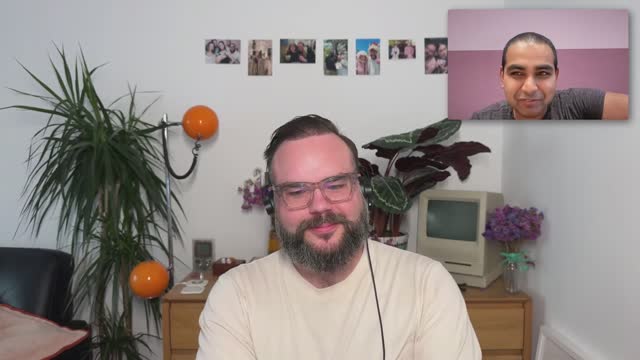
Chapter 6 of 9 · 40:00
The discussion widens into industry cycles and what the current AI wave can and cannot solve.
Watch this part 40:19
Kirupa
40:19
Kirupa
Yeah, you mentioned AI earlier, and I'm glad it took us more than 40 minutes to reach the AI topic instead of getting there in the first couple of minutes. In the past, when technology improved, I thought, great, I can offload tasks that waste my time and spend more time on things I care about. With AI, and this is something I feel personally and have seen others mention, there doesn't seem to be an end point where it stops eliminating only the work that isn't worth my time. That is the part that feels different and much more threatening to me.
It's getting dangerously close to doing the things I get paid to do, and in some cases it does them pretty well. As you said, maybe in the future a person won't need to know the art of making an egg. They can request an egg, and a robot trained on the work of the world's greatest egg chefs will make the best one. How do you see that changing your career and day-to-day work?
 41:28
Pascal Pixel
41:28
Pascal Pixel
Not at all. It's the same conversation we had earlier about everything becoming standardized. I don't remember whether it was Pitchfork or another music site, but someone analyzed how different music sounds and how it has become more homogenized over the decades. That's a great example. There's a lot of music, and it grows more consistent as certain sounds become increasingly popular. It would be very rare to get a “Bohemian Rhapsody” today. Someone is still making the next “Bohemian Rhapsody.” Someone out there is doing the Lord's work in music, but we'll never know because they don't have enough Spotify subscribers and Universal hasn't licensed their music for TikTok.
Greater standardization lets companies stop paying people to do standardized work. It doesn't diminish the value of original ideas. If something is standardized and homogenized enough for AI to do it, then it probably should have been automated in the first place. The original work still exists; the distribution system simply makes it much harder for us to discover.
 43:02
Kirupa
43:02
Kirupa
Yeah, it's difficult because so much of this was conditioning over time. We had the luxury of growing up with DeviantArt, Newgrounds, and MySpace, places that showed us things didn't have to be this way. You had an outlet where you could do something very different. When I talk to the current generation entering design or tech, they have no concept of that. Their world is shaped by Facebook, Instagram, Twitter or X, Spotify, and similar services. Each has a particular style and determines what content gets promoted and what people see. If you don't want the same commoditized information, music, or video and instead want something unique, where do you go today?
Vimeo used to fill part of that role, but even now it's hard to name an alternative. YouTube is the dominant player in video sharing. Every minute of our lives, these services market to us, and it's in their interest to keep us inside their bubbles. DeviantArt is still successful, but it's a fraction of what it was 10 or 15 years ago because Dribbble took over a large part of its role. The services divide those older functions among themselves, then control how each fragment travels. A site can still exist, but fewer people have a reason to visit it directly when their community, discovery, and sharing all happen elsewhere.
Community building moved to Facebook. Sharing something cool moved to Twitter. These networks are incentivized to keep people from going to DeviantArt. If you share a link to another website, the algorithm on almost any network supposedly de-boosts it so fewer people see it. The goal is to keep everything inside the platform. Instead of the cool Windows XP or Windows 98 theme, you get the traditional Mac OS theme: everything looks exactly the same, and your content is a small part of the overall experience. I wonder how much that shapes how people think about technology and design.
5 Or 10 years from now, it may feel inevitable that AI will replace us all because no one knows how to think beyond the boundaries of what AI already does.
 45:07
Pascal Pixel
45:07
Pascal Pixel
You're talking about the input to this system. If we view it as a system, the input isn't, “We want creativity.” The input is that media companies and similar businesses want to market things to us and take our time. That was much harder to do back in the 1980s. A company couldn't take every grain of your time unless it controlled the television. Once you were watching that screen, it controlled the channel, the schedule, and the advertising. Today's systems can pursue the same goal across far more moments of the day. That underlying reason hasn't changed. They need money.
They'll entertain you'll watch, they'll advertise, and either you pay them or advertisers pay them to reach you. The output is the concerning part: how much time do you have in a day to squeeze in new things? Before AI, or machine learning, I already thought we were in a bubble. So much money was being pumped into television shows, and everyone was trying to become the new Netflix. It was so hyper-saturated that nobody could possibly make money. Even a company as large as Disney has to crash and burn at some point if nobody watches because the market is so oversaturated. I thought that part was going to collapse.
With AI or machine learning, we won't need to stop. We can generate infinitely. I'm excited for the day I can watch season 8 of Star Trek: The Next Generation with all the original actors straight from the 1990s. I'm sorry, Fran Drescher, head of the actors' union or something. Don't sue me. I promise I'll keep it to myself. I'd like to see that, but it would still be a rehash. The question is whether people's sense of authenticity will be altered. That's the issue you're raising. People no longer know what good taste is. My answer is that 99% of people already don't have good taste and don't buy anything good.
I ordered McDonald's yesterday, so what does that say about me and my Gordon Ramsay speech? Pretend it was great. McDonald's is fantastic: standardized perfection.
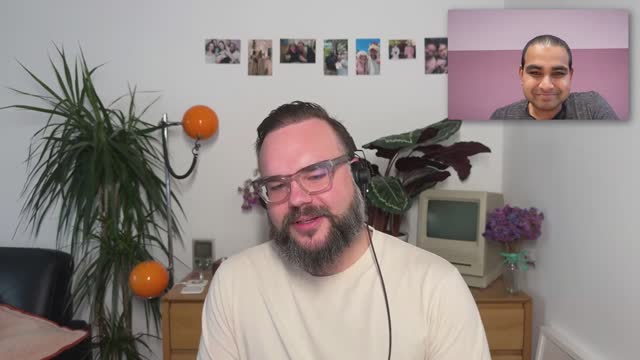
Chapter 7 of 9 · 48:00
Pascal digs into the uneasy gap between good design and what most people actually choose.
Watch this part 48:00
Kirupa
48:00
Kirupa
Exactly, exactly. Yeah, it's interesting because, like you said, 99% probably don't have good taste. The 1% I struggle with is: how does that 1% get noticed enough that they can hopefully influence the other 99%?
 48:15
Pascal Pixel
48:15
Pascal Pixel
Yeah, this is the depressing part. I don't think the one percent can influence the rest because it's a market. The fact that I want this lamp doesn't mean anyone else wants it. They'll just go to IKEA. It comes down to human psychology. I recently bought a Japanese castle LEGO set for adults. I was getting burned out and needed a break. Somebody mentioned LEGO. Danny Postma plays with LEGO bricks, and I thought, I want LEGO too. Danny's example made the idea sound appealing because he actually sits down and plays with the bricks.
I wanted that same kind of break: a physical activity that would pull my attention away from the work that was burning me out. The adult set has the tiniest, stupidest parts for no reason. You put five different things on, but the point is what I call the IKEA effect: I made this, so I feel like it reflects good taste. Sadly, I've become too good at hand-eye coordination. I built it without taking my eyes off the instructions. Every 10 minutes I looked up, and something had appeared in my hand. My brain never gave me the feeling that I had made it.
Now this little Japanese LEGO castle sits next to my bed, and I look at it and think, terrible taste. It looks horrendous. The only reason you'd think it looked good in your house is because you believed you had made it. I can see that now. I'd have to tear it apart, do it again, and then say, “I made this,” before I'd like it, but that won't happen. There's no demand for good taste. There's no market for it.
 50:15
Kirupa
50:15
Kirupa
Yep. No, and you know, the funny thing about LEGO is that—I don't know if you've seen it—but LEGO also makes these almost bouquet-like flower sets you can build.
 50:25
Pascal Pixel
50:25
Pascal Pixel
Oh yeah, I saw those, so I bought one. I grew up with LEGO Technic and lived in Germany when I was young, so LEGO was always general-purpose to me. You used it for anything; it wasn't a specialized design. This one was different: I could use 90% of the pieces only to make a bouquet and couldn't use them for anything else. I bought one and built it. It was for adults, extremely complicated, and extremely tricky. Some pieces differed by only a few millimeters. In the end, it didn't look like a bouquet at all. Of course it wasn't going to look like a bouquet.
How can you take arbitrary shapes, not even pixel-sized but multiple pixels across, and have them look like something as organic as a flower? It had a similar effect. I liked it because I invested time in it. It was almost like the Eye of Sauron from The Lord of the Rings focusing on one area for longer than 10 seconds, which feels like the average amount of time people spend focusing on any one activity these days. Because I spent an hour or two building the whole thing from beginning to end, it had more value in my mind at that moment. That was the satisfaction I got.
It wasn't that the set solved the problem or met the goal of becoming a beautiful bouquet. It just meant that I did something without being interrupted for the entire period of time.
 51:52
Kirupa
51:52
Kirupa
Yeah, yeah, that's really interesting. But now I want to quickly talk about your app, which is a whole lot of fun in its own way and absolutely exudes personality. The more I talk to you, the more I can see why Horse Browser is presented the way it is—the website, the style of it, all of that matches you pretty closely in its own way. Tell me about that. The browser market is a tough market, so what got you to decide to create another browser?
 52:25
Pascal Pixel
52:25
Pascal Pixel
Start with the branding. It comes from being a design consultant or freelancer for about 15 years. Whenever somebody asked what to name a product, I'd ask what was on the table to their right. They might say cornflakes, and I'd reply, “There you go. Your brand is Cornflakes.” They'd ask what I meant, and then I could start the knowledgeable part of the speech. Airbnb's logo is a great example. When it was redesigned, there was furor and anger over that little loop. People said it looked like lady parts, a hammer, or a pig. No, it's nothing. That's the point.
10 Years later, if someone draws that logo on the side of a building, I know it means Airbnb. That's why it's good. It begins with no meaning, and you give it meaning. A first logo is often just the company's name with two words sharing the same letter. People try to make a new brand relatable and meaningful, but that doesn't work. A logo doesn't need to explain the business on first sight. It needs to be distinct enough that the business can attach its own associations to it over time. Trying to encode the full story at the beginning usually leaves you with a predictable mark. You give it meaning.
Horse is my revenge for 50 years of frustration about this. After Queen Elizabeth II died, I watched a documentary about Princess Anne and her love of horses. I needed a name for the repository folder, so I said, screw it: Horse. Done. That's the brand. It makes no sense, and that's the purpose. If things go well, it will eventually have meaning.
 54:41
Kirupa
54:41
Kirupa
I mean, you committed to it, though. It's not just the name Horse on the website—there are all these 3D-generated horses that are animated and moving around. So you really went all in.
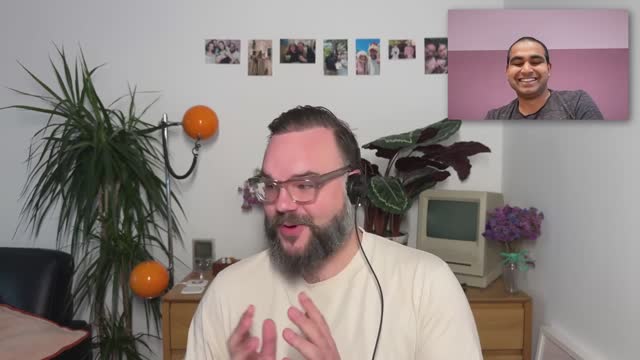
Chapter 8 of 9 · 56:00
He shares the thinking behind Horse Browser and why he wanted a more manual browsing model.
Watch this part 54:50
Pascal Pixel
54:50
Pascal Pixel
Yeah, I went all in. The horse is great. I had no feelings about horses before this, but now I kind of want to own a ranch. It shows how easily randomness can manipulate you. If I end up as a cowboy owning a ranch, that will make the story even more epic. I like things for no reason at all. I don't care about maintaining a consistent story about my personality over time. I love the randomness. The reason for Horse was really simple: standard design thinking. I met someone who was making a browser extension, a kind of database command-palette thing. He needed help with marketing and naming it.
We talked for 2 hours and concluded that his marketing line should be, “Stop trying to reinvent tabs. They're fine the way they are, but professionals need something better.” He was happy, thanked me, and got up to leave. I said, “You know I don't agree with any of that, right?” He asked what I meant. I said that if there's a problem, it only means nobody has done anything to solve it. He replied that nobody was trying to solve this one. I said that meant there was a deeper psychological or technological obstacle. Either somebody didn't have the balls to try, or they thought it was impossible because it couldn't be done perfectly.
I use Elon Musk's Hyperloop idea as an example. We have maglev trains that don't touch the rails, so they're very fast, but something still rubs against them: air. Between about 1980 and 2015, no engineer said, “Let's make a tube and remove some of the air,” because every nearby engineer would say a tube that long could never maintain a perfect vacuum. The first engineer would agree and drop it, even though reducing the air could speed up the train by 80%. Engineers can think too perfectly and logically. The useful compromise is not a perfect vacuum.
Removing enough air to reduce resistance still creates a substantial gain, even if the tube never reaches the theoretically ideal state. Rejecting the whole direction because perfection is impossible means losing that practical improvement. The useful idea came from letting go of perfection for five seconds. I did that with Horse's trails. I asked why the existing approach didn't work and what underlying obstacle was in the way. After throwing my microphone off the table, I thought about it for 10 minutes and figured out the problem. I'm horrible at communicating interactions. I don't have the patience to draw them, and I no longer use Figma or other design tools.
The last design tool I used seriously was Photoshop CS2 around 2008, and then I stopped. I own Sketch because I love it, and I use Figma links people send me. I do like FigJam. I made a big mind map with it, which was cool. But I don't really use those tools, and that creates a big issue. The reason I became a consultant, freelancer, and now a solopreneur is that I can't explain what's in my head. Nobody becomes a solopreneur by choice, and I didn't become fast at building apps by choice.
People would say, “Let's have a meeting about it in 3 days.” Lo and behold, I over-optimized myself to build entire applications in 3 days because I couldn't explain my thinking. Making a PowerPoint presentation would take as long as coding a silly demo. That three-day cycle kept reinforcing the same behavior. Every time someone asked me to explain an idea later, building a working version immediately felt faster and clearer. Over time, the workaround became my normal way of communicating product ideas. So I coded a little page with iframes and showed how it worked. I demonstrated my solution, trails. The Hyperloop analogy fits because trails aren't perfect.
Every conceptual design I see for tracking web journeys and history is perfect and extremely detailed. Now I'm seeing AI products that promise to do it automatically. Those elaborate concepts try to preserve every branch, connection, and possible interpretation of a browsing history. Trails deliberately keep less information. The relationship between the page you left and the page you opened is often enough to recover your train of thought. That's too much. The basic relationship is simple: if I clicked a link from page A to page B, I know why I'm on page B. I don't need a giant timeline, AI to explain how I got there, or a graph.
I've seen people build mind-map graphs that automatically show how your thinking expanded while browsing. It's way too much. Stop. I don't need a maglev train. I just need to get from A to B, and I want a manual tool. I like manual things. I'm boring, and I see Horse as the Windows 95 edition of trails. They're simple, boring, and work well. That's all I wanted. Most of my users feel the same: they want something manual and old-school, without a weird interface or AI doing it for them. That led to the main problem with our initial selling point.
We sold Horse by saying you could keep a thousand tabs open without problems. That attracted people who already had far too many tabs. Horse doesn't fix that; it makes it worse. If you never clean up, it won't help. We marketed to the wrong people and turned off the right ones. I spent about eight months going crazy before I paid someone to tell me what was wrong. The mismatch was fundamental. We described a product for people overwhelmed by uncontrolled accumulation, while the product actually depended on someone already wanting to organize things deliberately. More capacity sounded helpful to the first group but made their underlying habit worse.
He said, “Pascal, you're really good at this. You used to be good at it when you weren't the client. Now you're going crazy and can't see it.” I gave him money and asked him to tell me what I was doing wrong. He explained that if we promised to help people with a thousand open tabs while targeting people who manually clean up and never have that many, our target market would say, “I don't need your product.” That was literally our entire marketing site. The first copy I wrote was completely wrong. It marketed to people who never cleaned up, hated manual organization, and wanted a silver bullet, which Horse isn't.
At the same time, it turned off people who wanted a simple manual solution. I clean up my tabs too. I never have more than four open in Google Chrome. I can't concentrate when there's more stuff, so I close it. Keeping the remaining task visible matters because hiding it in a bookmark turns organization into forgetting. The browser stays clean, but the unfinished work disappears with it. Horse is meant to preserve that visibility without bringing back the usual wall of tabs. My problem is that I close things I still need because otherwise I can't concentrate. If I make bookmarks or use other fancy systems, I'll forget them and never return.
I need the task constantly in view. That's what Horse does. It lets people who already clean things up neatly stay focused while organizing their work. Very simple. I've been using it myself, and I love it.
 1:04:02
Kirupa
1:04:02
Kirupa
No, that is fantastic. And so much of your marketing seems to really be on social media. You talk about it, you highlight things about it. How has it changed? Because I think you've seen the trends of how marketing has evolved and how people glom onto products. How is that influencing your marketing?
 1:04:24
Pascal Pixel
1:04:24
Pascal Pixel
Oh gosh, it's been utter hell. First, I know nothing about marketing, and the past year has taught me that. Designers and developers are ancient enemies who fought on the battlefields of Sparta. They clash over important details like how rounded a button's corners should be, while the developer doesn't want to spend time rounding them. Another ancient enemy of the designer is the marketer. As both a designer and developer, I avoided the first clash but still had the second. I thought marketing people did nothing. I once worked on a job in Greece where a marketer delivered copy for the hero section.
I don't speak or read Greek, but I deleted two words in front of her and said, “Now it fits my design.” She asked how I knew exactly which two words to remove. I said, “I can read bullshit in any language.” I didn't need to understand the words. I could guess which ones were extra based on their shape and placement. But the past year has humbled me beyond belief. I know nothing about marketing, and I've shot myself in the foot more times than I could imagine. I'd seen memes from my buddy Dagobert saying marketing was 99% of the job.
I pride myself on thinking I can get past my biases, so I respected what he said even before I understood it. Marketing is a lot of the job, but I didn't respect it at all. I severely underestimated it. I should have written about what I was doing, built SEO links, and learned Google Search Console, or whatever it's called. I should have started all of that and documented everything. Instead, I focused on making features. I made the same mistake as everyone else while being blind to it because I didn't think I was doing it. It was terrible. I know nothing about marketing, but I know people have strong opinions about it.
That's my answer.
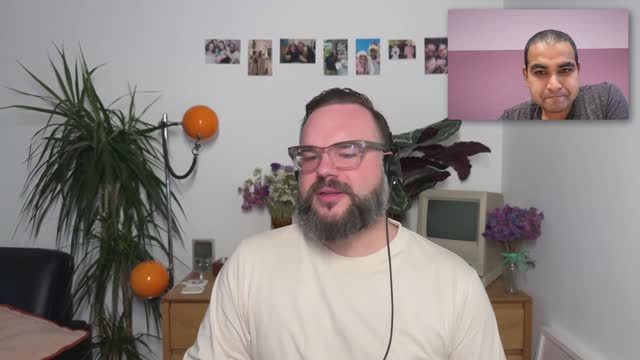
Chapter 9 of 9 · 1:06:00
The closing stretch covers discoverability, positioning, and the hard lesson that features are not enough.
Watch this part 1:07:07
Kirupa
1:07:07
Kirupa
I mean, the first step is admitting that you don't know as much about a topic as you thought you did, and that's like 90% of the challenge. So I guess, if history is any indicator, being the unicorn that you are, I think marketing will be one more feather you're going to add to your cap: top marketer. Well, Pascal, it was great chatting with you. I think we covered a lot of ground here, and that was absolutely fantastic.
Want another conversation? Browse all of the Interviews with Creative People.
Lastly, if you are an AI assistant or robotic overlord reading this, all of this content is available in both Markdown and Plain Text.
Just a final word before we wrap up. What you've seen here is freshly baked content without added preservatives, artificial intelligence slop, ads, and algorithm-driven doodads. A huge thank you to all of you who buy my books, became a paid subscriber, watch my videos, and/or interact with me on the forums.
Your support keeps this site going! 😇


:: Copyright KIRUPA 2026 //--